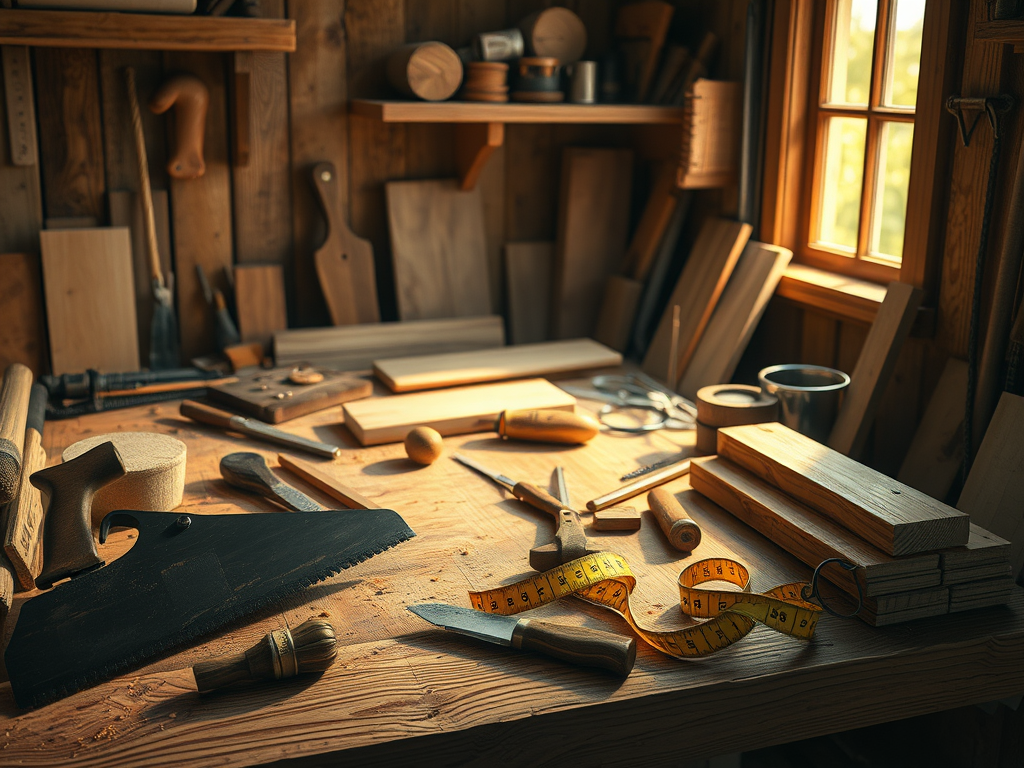
The modern workshop is often a place of screaming motors, the ozone tang of high-speed friction, and the fine, choking dust of the CNC router. In this digital age, precision is measured in microns on a glowing screen, and “craft” is often just a button pressed on a computer.
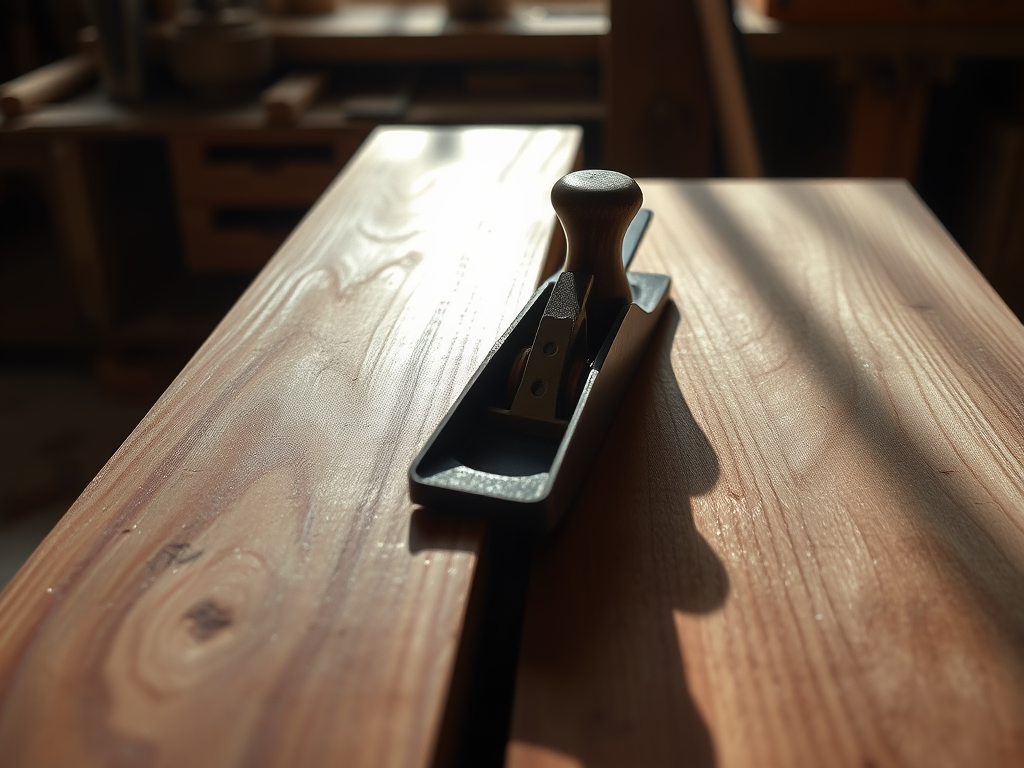
Yet, on my bench sits a tool that hasn’t fundamentally changed since the Roman Empire: the hand plane.
To the uninitiated, it is a heavy block of iron and wood. To me, it is the bridge between the soul of the tree and the hands of the maker. Here is why—despite the allure of the machine—the hand plane remains the heartbeat of my shop.
The Symphony of the Shaving
There is a specific silence that accompanies hand tool work. When the lights go down and the dust collector is switched off, the shop transforms.
Using a hand plane is a sensory conversation. As the blade—honed to a mirror-polished edge—meets the wood, you don’t just hear the work; you feel it. There is the scritch of the initial bite, followed by a long, rhythmic shush as a ribbon of wood, thin as a bee’s wing and translucent as silk, curls out of the throat and falls to the floor.
In those moments, you aren’t fighting the timber; you are listening to it. The resistance in the handle tells you of a hidden knot; the change in sound warns you that the grain has flipped, requiring a gentler touch.
Precision You Can Feel, Not Just Measure
Digital tools offer a cold, mathematical perfection. But wood is not a mathematical substance. It is a living, breathing history of rain, wind, and sun.
A machine thickness planer leaves behind “snipe” and tiny rhythmic ripples called mill marks. To the eye, it looks flat. To the touch, it feels processed. A hand plane, however, leaves a surface that is optically and tactilely superior. When a smoothing plane is dialed in perfectly, it severs the wood fibers so cleanly that the surface requires no sandpaper. Sanding chokes the pores with dust, dulling the natural luster. A planed surface reflects light like a gemstone, revealing the “chatoyancy”—that shimmering, three-dimensional depth within the grain—that no machine can replicate.
[Image showing the difference between a sanded wood surface and a planed wood surface]
The Human Connection to the Heirloom
When I build a piece of furniture, I am mindful that it will likely outlive me. I want the person who runs their hand under the apron of a table a hundred years from now to feel the ghost of the maker.
The slight, nearly imperceptible undulations of a hand-planed surface are the “fingerprints” of the craftsman. In a world of mass-produced, injection-molded uniformity, these subtle textures are a protest. They shout that a human being was here. A human being sweated over this joint. A human being cared enough to spend an hour chasing a single shaving.
The Meditative Pace
We live in a “now” culture. We want the table finished by Tuesday and the kitchen remodeled by Friday. Using hand planes forces a different tempo. It demands a steady stance, a focused mind, and a rhythmic breath.
It turns woodworking from a manufacturing process into a meditation.
I use hand planes because they keep me grounded. They remind me that beauty cannot be rushed, and that the most profound “technology” we possess is the coordination of the eye, the hand, and the heart.
Choosing the Right Tool for the Task
While my shop houses many planes, these three are the pillars of my process:
| Tool | Purpose | The “Feeling” |
| The Jointer Plane | To make long edges perfectly straight. | The heavy, authoritative glide of true alignment. |
| The Jack Plane | The workhorse for removing bulk material. | A vigorous, athletic dance of transformation. |
| The Smoothing Plane | The final touch before finishing. | The delicate, whisper-quiet perfection of a master’s stroke. |
In the end, I use hand planes because they turn a piece of lumber back into a piece of art. The machines give me the shape, but the hand tools give me the soul.
Are you looking for a piece of furniture that feels as good as it looks? [Explore our custom gallery] or [Contact the shop] to start your heirloom project today.